
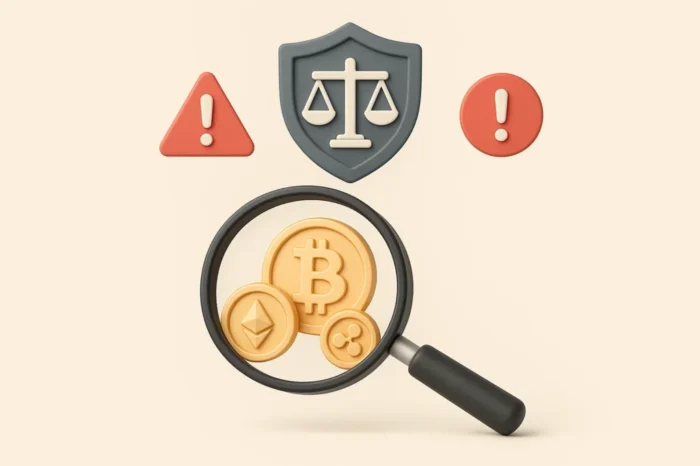
Regulators are hitting crypto: fines to exchanges in Korea and a warning from the ECB on stablecoins
After a high-profile case against the operator Upbit, South Korea’s financial intelligence agency is preparing to extend similar measures to other leading platforms. Large exchanges are being targeted for violations in the areas of compliance, transaction accounting and anti-money laundering procedures.
Scale of possible sanctions
According to local media estimates, the fines could amount to tens of millions of dollars for each of the sites, which would directly hit their profitability and force a review of internal processes. Exchanges will likely have to strengthen their compliance staff, implement additional monitoring systems, and tighten requirements for users.
ECB position on stablecoins
The European Central Bank warned in a recent review that the widespread adoption of stablecoins could displace significant volumes of retail deposits from traditional banks. The regulator points out that in stress scenarios, a massive withdrawal of funds from a stablecoin could create a chain reaction and affect not only the crypto market, but also the wider financial sector.
Possible consequences for the crypto industry
Tighter regulation in South Korea and tough rhetoric from the ECB are creating a tougher regulatory environment for the crypto industry. On the one hand, this increases costs and may push some retail users into unregulated services; on the other, it increases transparency and makes the market more attractive to institutional players.
News highlights
- South Korean financial intelligence is preparing for large fines for leading crypto exchanges for violations of compliance and AML procedures.
- The size of sanctions could reach tens of millions of dollars per site and will force exchanges to strengthen control over clients and transactions.
- The ECB warns that stablecoins pose the risk of crowding out retail deposits and a threat to the financial stability of the eurozone.
- Regulators are aimed at tightening requirements for stablecoin issuers and crypto service operators.
- A more stringent regulatory environment simultaneously increases market transparency and encourages the flow of liquidity to a less regulated segment.
The information is for informational purposes only and under no circumstances constitutes individual investment advice.

The crypto market isn't just about numbers—it's a complex ecosystem where politics, technology, and economics intertwine. In my news coverage, I strive not merely to recount events, but to analyze their real impact on the market. My goal is to make cryptocurrency news clear, accessible, and objective.