Historic Solana upgrade: Jump Crypto launched an independent Firedancer client on the main network
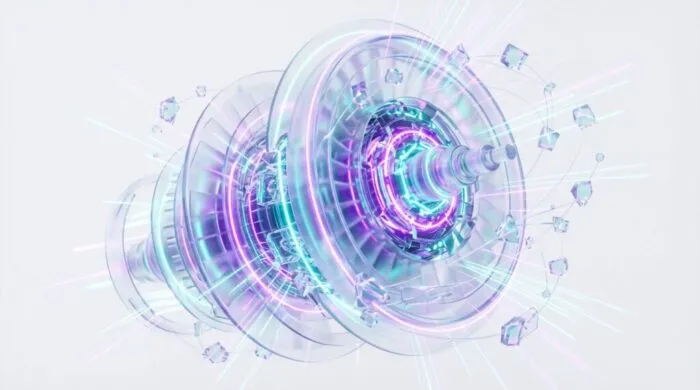
The infrastructure division of investment giant Jump Crypto and the non-profit organization Solana Foundation have officially announced the long-awaited launch of the independent validator client Firedancer (in the hybrid Frankendancer architecture) on the Solana mainnet (Mainnet Beta). This event marks a fundamental change in the architectural development of high-performance blockchains: for the first time in its history, the Solana ecosystem has overcome the long-standing critical vulnerability of the “single point of failure”, getting rid of its monopolistic dependence on the original Solana Labs code base (Agave).
How does Firedancer solve the problem of sudden-failures and network-disconnections?
Over the past few years, Solana’s Achilles heel has been its lack of Client Diversity. If in the Ethereum ecosystem the simultaneous operation of clients Geth, Nethermind, Besu and Erigon guarantees the survival of the network if a critical vulnerability is detected in one of them, then in Solana any hidden consensus bug in the Agave client led to paralysis of validators and a complete stop of block generation. Firedancer is a fundamentally independent software implementation written from scratch. Even in the event of an unexpected failure of Agave-based nodes, validators running Firedancer will continue to maintain consensus and finalize transactions, guaranteeing 100% uptime of the blockchain.
How does C++ architecture accelerate performance to extreme-speeds?
Unlike the standard Agave client, written in Rust, Jump Crypto engineers created Firedancer in ultra-low-level C/C++, using advanced algorithmic developments from the field of high-frequency trading (HFT). The architecture completely eliminates dynamic memory allocation during transaction execution, optimizes work with network interfaces bypassing the OS kernel, and uses hardware instructions of modern server processors. In stress tests, Firedancer has demonstrated sustained throughput in excess of 600,000 transactions per second (TPS) in an isolated environment, with a theoretical cluster limit estimated at 1,000,000 TPS as physical throughput increases.
What does switching-to-Firedancer mean for institutional-capital-and-sol-rate?
For institutional funds on Wall Street and issuers of upcoming Solana spot ETFs, technical network instability remained the main argument against large-scale capital allocations. The full deployment of a second independent client eliminates the institutional reliability discount, bringing Solana closer in fault tolerance to the infrastructure of global exchanges at the level of NASDAQ and CME Group. Against the backdrop of the historic release, the SOL token demonstrated a confident upward rally, rising in price by 8.4% to $148 with a daily trading volume exceeding $4.2 billion.

The crypto market isn't just about numbers—it's a complex ecosystem where politics, technology, and economics intertwine. In my news coverage, I strive not merely to recount events, but to analyze their real impact on the market. My goal is to make cryptocurrency news clear, accessible, and objective.